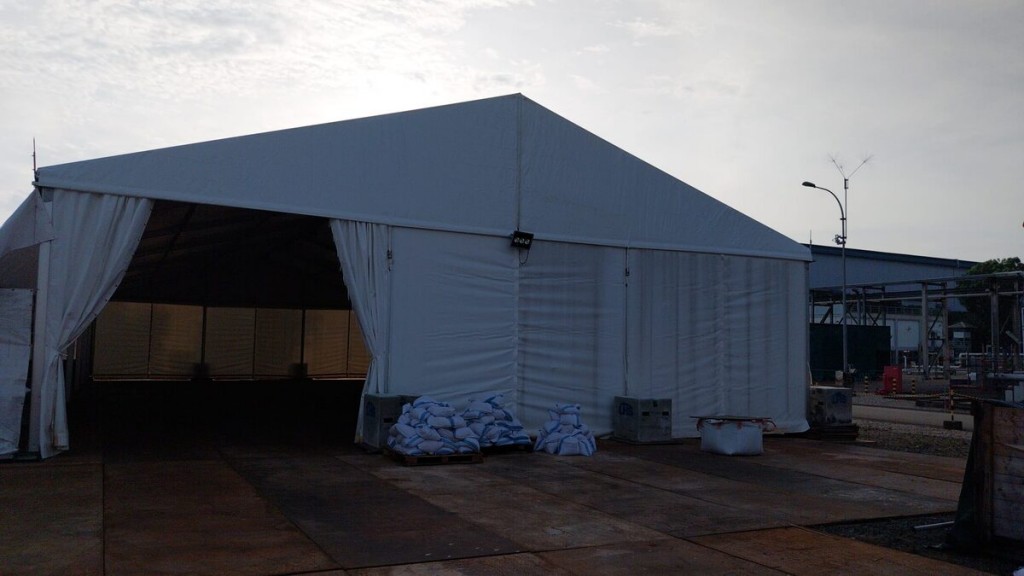
A properly installed event tent with correct anchoring and ballast is designed to withstand typical Singapore thunderstorms, including strong gusts and heavy rain, without structural failure. This explains what actually happens during a storm and what safety measures matter most.
How Tentage Is Designed to Handle Storms
Professional event tentage uses either ballast weights or ground stakes, depending on the surface, calculated to hold the structure against wind loads well beyond typical afternoon thunderstorm conditions. Frame tents in particular are engineered to flex slightly under wind pressure rather than remaining rigid, which helps distribute force rather than concentrating stress at a single point.
Sidewalls play a role here too. Fully closed sidewalls can actually increase wind load on a structure by acting like a sail, which is why some tentage setups are designed to have sidewalls partially open or removable during genuinely severe wind conditions.
When to Evacuate a Tent
Lightning is the primary safety concern during a thunderstorm, not the tent structure itself. A tent offers no protection from lightning strikes, so standard advice applies: guests should move to a fully enclosed permanent building if lightning is present, regardless of how well-anchored the tent is.
Extremely severe wind warnings or visible structural stress, flapping beyond normal movement, audible strain on anchor points, are also signals to evacuate a tent as a precaution, even if this is rare with a properly installed setup.
What a Reliable Tentage Crew Does Differently
Experienced crews check the weather forecast before and during setup, adjusting anchoring and sidewall configuration based on expected conditions rather than using a one-size-fits-all approach. For events during forecast storm risk, some crews also do a mid-event check to confirm anchoring remains secure.
Frequently Asked Questions
Is it safe to be under a tent during a thunderstorm?
The tent structure itself is generally safe from wind damage when properly installed, but lightning remains a risk regardless of tent quality. Move to a fully enclosed building if lightning is present.
Can a tent collapse during a storm?
This is rare with properly anchored, professionally installed tentage, but not impossible under extreme conditions. This is why correct anchoring and ongoing checks during severe weather matter.
Should sidewalls stay closed during a thunderstorm?
Not always. Fully closed sidewalls can increase wind load, so some setups are designed with partial or removable sidewalls specifically for higher-wind scenarios. Discuss this with your tentage provider for events with storm risk.
Ballast vs. Stakes: Which Holds Better in a Storm
Stakes driven into soil generally provide stronger holding power than ballast weights on hard surfaces like concrete void decks, where stakes aren’t an option. This is why void deck tentage setups typically use heavier ballast weights to compensate, and it’s worth confirming your tentage crew has factored in the specific surface when planning anchoring for a storm-prone period.
For events on marginal surfaces, part grass, part concrete, a mixed anchoring approach using both methods where each is most effective often provides the most reliable overall hold.
Setup Timing and Weather Windows
Setting up tentage with enough buffer before a forecast storm, rather than racing to finish just as weather turns, gives the crew time to double-check every anchor point properly rather than rushing. This is one reason experienced tentage companies build weather buffer time into their scheduling for events during higher-risk periods.
If a storm is actively passing through during scheduled setup, most crews will pause and wait it out rather than working through dangerous conditions, which can shift the setup timeline slightly but is the safer approach for the crew and the final installation quality.
What to Tell Guests About Storm Procedures
For significant events with storm risk in the forecast, having a simple, clearly communicated plan, where to go if evacuation is needed, who makes that call, reduces confusion if it’s ever actually needed. This doesn’t need to be elaborate, just clear enough that event staff and guests know the plan exists.
What should I do if I’m at an event and a thunderstorm starts?
Follow the event’s communicated storm procedure if one exists. If lightning is present, move to a fully enclosed permanent building rather than remaining under any tent, regardless of how well it’s anchored.
The most common mistake we see is families or event organisers assuming a tent is a safe shelter from all storm conditions in the same way a building is. It’s an excellent shelter from rain and sun, but it doesn’t change lightning safety guidance, which applies regardless of tent quality or anchoring.
Next Step
For events where storm safety is a concern, discuss anchoring and sidewall configuration through our tentage rental services, or contact us directly to plan accordingly.
