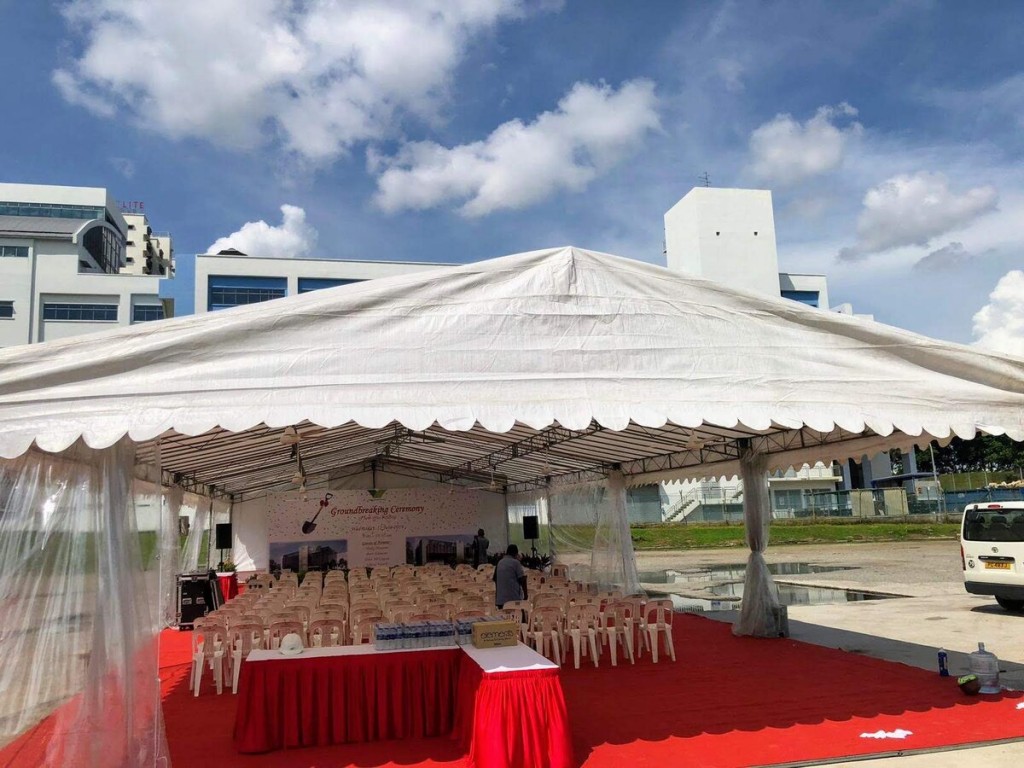
A company D&D under tentage needs a tent sized for seated dinner plus dance floor and stage space, proper lighting for an evening event, and enough power capacity for AV equipment. This guide covers sizing, budget, timeline and what typically goes wrong so your planning committee can avoid the common pitfalls.
How Much Tentage Space a D&D Needs
A seated dinner allocates roughly 1-1.2 sqm per pax including table and chair space, but a D&D also needs room for a stage, dance floor and often a photo booth or lucky draw area. Budget an additional 20-30% of floor space beyond pure seating capacity for these elements.
| Headcount | Seating Only | With Stage & Dance Floor |
|---|---|---|
| 100 pax | ~120 sqm | ~150-160 sqm |
| 200 pax | ~240 sqm | ~300-320 sqm |
| 400 pax | ~480 sqm | ~600-640 sqm |
How Much Does D&D Tentage Cost?
A typical D&D tentage setup for 150-200 pax, including tent, tables, chairs, stage and basic lighting, runs SGD 4,000-8,000, depending on tent grade, AV requirements and whether aircon tentage is included. Larger 400+ pax events with full production can exceed SGD 15,000.
The biggest cost swing factor isn’t the tent itself, it’s the AV and lighting package layered on top. It’s worth getting the tentage quote and AV quote separately clarified so the committee can see where the budget is actually going.
Step-by-Step: Planning D&D Tentage
- Confirm headcount and format. Seated dinner, standing reception, or a mix, this changes the space calculation significantly.
- Decide on stage and dance floor needs. Award presentations, performances and dancing all need dedicated space separate from dining tables.
- Book the venue and confirm tentage access. Some venues, like open fields or company car parks, need full tentage; others, like void decks or covered courts, may need only partial coverage.
- Get AV requirements confirmed early. Sound system, projector or LED screen, and lighting design all need power planning coordinated with the tentage crew.
- Confirm setup and teardown timing. Most D&D setups take 6-10 hours depending on scale, usually completed the day before or morning of the event.
AV, Power and Lighting Considerations
Power planning matters more for a D&D than almost any other tentage event, since sound systems, stage lighting and sometimes catering equipment all draw from the same source. Confirming generator capacity or venue power access early avoids a last-minute scramble on event day.
For events with significant AV needs, our miscellaneous items and equipment services cover staging, sound and lighting alongside the core tentage setup, so it’s worth discussing both together rather than coordinating separately.
Common Mistakes Committees Make
The most common mistake we see is underestimating stage and dance floor space, then discovering the seating plan doesn’t actually fit once the full layout is mapped out. Confirming the complete floor plan, not just table count, before finalising the tent size avoids this.
Another frequent gap is not confirming who’s responsible for AV setup versus tentage setup, leading to confusion on event day about timing and access. Naming one coordinator to liaise between both vendors solves this cleanly.
Frequently Asked Questions
How much does D&D tentage cost for 150-200 pax?
Typically SGD 4,000-8,000 including tent, tables, chairs, stage and basic lighting, with AV and aircon as separate cost factors depending on requirements.
How much extra space does a stage and dance floor need?
Budget 20-30% more floor space beyond pure seating capacity to accommodate a stage, dance floor and any additional activity areas.
How far in advance should D&D tentage be booked?
4-8 weeks ahead is comfortable, especially for peak season dates in November and December when many companies hold their D&D simultaneously.
Can the tentage company also handle AV and staging?
Many can, through miscellaneous items and equipment services covering staging, sound and lighting alongside tentage. Confirm this when getting your quote to simplify coordination.
Choosing the Right Venue for Your D&D
Company car parks, open fields, community hall compounds and hotel outdoor spaces are the most common D&D venues requiring tentage. Each has different access considerations: car parks need careful planning around remaining vehicle spaces, while open fields typically offer the most flexible layout but require full tentage coverage including flooring.
Confirm ground surface and power access with the venue before finalising tentage plans, since this affects both anchoring method and generator or power point placement. A site visit, even a quick one, resolves most surprises before they become setup day problems.
Weather Planning for Outdoor D&Ds
Singapore’s afternoon thunderstorms and the Nov-Jan monsoon season both matter for D&D planning, since most events run into the evening when storm risk from the day may still be settling. Sidewalls ready to drop and a stage covered from wind-driven rain are standard practice for a properly planned outdoor D&D.
If your D&D falls between November and January, budget extra time for weather contingency planning and confirm with the tentage company how quickly the crew can adjust sidewalls if rain starts during the event itself.
Coordinating Between Tentage, AV and Catering Vendors
A D&D typically involves at least three vendors working in the same space: tentage, AV/staging, and catering. The most common setup-day friction comes from these three not having a shared timeline, leading to one crew waiting on another to finish before they can start their portion.
A simple shared setup schedule, even a basic timeline document circulated to all three vendors in advance, prevents this. It’s a small coordination step that makes a noticeable difference to how smoothly setup day runs.
Budget Breakdown: Where the Money Goes
For a typical 150-200 pax D&D, tentage (tent, tables, chairs, basic lighting) usually accounts for 40-50% of the total setup budget, with AV and staging making up another 30-40%, and the remainder going to extras like a photo booth, additional decor, or premium flooring. Understanding this split helps committees prioritise where to spend versus where to keep things simple.
Committees on a tighter budget often find the easiest place to trim is decor and extras, while keeping the core tentage and AV budget intact, since these two directly affect the event’s basic functionality and guest comfort.
Timeline: Planning Your D&D from Start to Finish
| Timeframe | What to Confirm |
|---|---|
| 8-10 weeks before | Venue booked, headcount estimate, tentage company shortlisted |
| 4-6 weeks before | Tentage and AV quotes confirmed, deposit paid, theme and layout finalised |
| 2-3 weeks before | Final headcount, detailed floor plan shared with all vendors |
| 1 week before | Setup day timeline confirmed with tentage, AV and catering vendors |
| Setup day | Tentage crew arrives first, followed by AV and staging, then catering closer to event time |
This timeline compresses for smaller, simpler D&Ds but holds roughly true for most mid-to-large corporate events. The main risk of leaving things too late is losing your preferred date, since November and December are the busiest months for tentage bookings across Singapore.
Seating Layouts and Flow
Round tables of 10 are the most common D&D configuration, balancing conversation flow with space efficiency. For events with a strong stage program, angling tables toward the stage rather than a strict grid layout improves sightlines without sacrificing much floor space.
Leave a clear walking path from entrance to seating to stage, ideally without guests needing to squeeze between tables, especially important for events where staff will be moving between tables serving food throughout the evening.
Lighting Design Beyond the Basics
Standard tube lighting keeps a tent functional, but many D&Ds add uplighting, coloured wash lighting or a lit stage backdrop to elevate the atmosphere. This is typically coordinated through the AV or staging vendor rather than the tentage company, though the two need to agree on power distribution.
If budget is tight, a well-lit stage area combined with simpler ambient lighting elsewhere in the tent is usually a better use of lighting budget than trying to elaborately light the entire space.
Handling Wet Weather on the Night
Even with careful planning, Singapore weather can still deliver a surprise. The most common mistake we see on D&D setup day is a committee assuming sidewalls are automatically included when they haven’t specifically confirmed this, only to find out during a pre-event site check.
Confirm sidewall availability and who’s responsible for deploying them if rain starts during the event itself, ideally a tentage crew member on standby rather than relying on event staff unfamiliar with the tent’s mechanisms.
Aircon Tentage for Larger D&Ds
For events with 300+ pax or dates falling during particularly warm stretches of weather, aircon tentage is worth considering despite the added cost. Guests seated for a multi-hour dinner and program notice heat far more than at a standing reception, and comfort directly affects how the evening is remembered.
Aircon tentage typically adds 20-40% to the base tentage cost depending on tent size, so it’s a decision best made early when finalising budget rather than added as a late request that may not be accommodated in time.
Working with Your Company’s Procurement Process
Many companies require multiple quotes before approving a tentage vendor, which can add a week or more to the planning timeline. Starting the quote-gathering process early, even before all other event details are finalised, helps avoid this becoming the bottleneck for booking your preferred date.
It’s also worth asking tentage companies directly whether they can accommodate your company’s invoicing and payment terms, since corporate procurement processes sometimes differ from the standard deposit-and-balance structure used for private events.
After the Event: Teardown and Feedback
Teardown typically happens either late the same night or early the next morning, depending on venue rules and whether the space is needed for other use. Confirming this timing in advance, particularly for car park venues where vehicles need the space back, avoids any awkward conversations on the night.
Gathering quick feedback from your planning committee on what worked and what didn’t with the tentage setup is genuinely useful for next year’s planning, and most tentage companies are happy to hear this feedback directly too.
Small Committee, Big Event: Delegating Effectively
Most D&D planning committees are volunteers juggling this alongside their regular job, so delegating vendor coordination to one or two designated leads rather than spreading decisions across the whole committee tends to produce smoother results. A single point of contact for the tentage company specifically avoids conflicting instructions arriving from different committee members.
Documenting key decisions, headcount, layout, timeline, in a shared document that all vendors can reference reduces the back-and-forth calls and emails that otherwise eat up committee members’ time in the final weeks before the event.
None of this needs to be complicated. The committees that run the smoothest D&Ds tend to be the ones who lock in the big decisions early, headcount, venue, budget split, and leave the smaller details to be refined closer to the date.
Booking Your D&D Tentage
Start with your confirmed headcount and format, then get a tentage quote that accounts for stage and dance floor space, not just seating. Reach out through our services to discuss your D&D requirements, or contact us directly for a detailed quote.
