
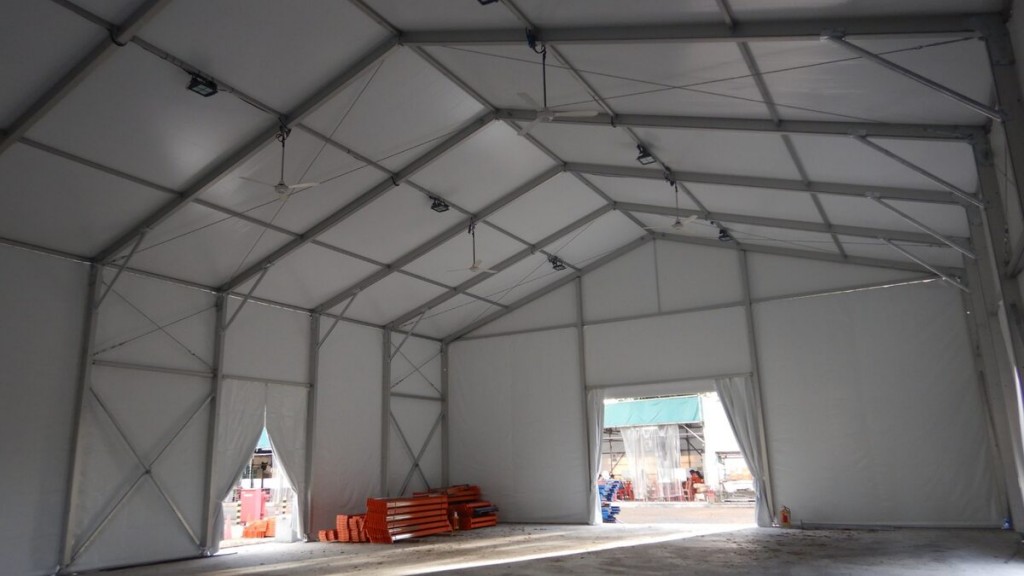
Yes, most tentage installations in Singapore require some form of approval before setup, whether that is a BCA temporary structure permit, town council clearance for a void deck, or a land-use permit from NParks or SLA. The exact requirement depends on the tent’s size, the land it sits on, and how long it stays up. Skipping this step is the single fastest way to have your event shut down on the day itself.
When You Need a Permit for Tentage in Singapore
As a rule of thumb, any tentage exceeding 15 square metres in floor area, or any structure erected on land you do not own or manage, triggers some form of permit requirement. A small 3m x 3m gazebo in your own landed property compound is usually fine without paperwork. A 10m x 20m tent on a void deck or field is not.
We get asked constantly whether a “small tent” is exempt. It is not the size alone that matters, it is the combination of size, location, and duration. A tent on public or shared land almost always needs sign-off, even if it is up for only one afternoon.
BCA Temporary Structure Requirements for Tentage
The Building and Construction Authority (BCA) regulates temporary structures under the Building Control Act. Tentage exceeding 15 square metres, or any structure with a raised platform, stage, or aircon tentage rental (lianhupseng.com.sg/services/tents-singapore/) with heavy equipment attached, typically needs a Temporary Occupation Permit (TOP) application or falls under BCA’s exemption criteria that must still be checked and documented.
The most common mistake we see on setup day is organisers assuming their supplier has “already handled the permit” without confirming what was actually filed. A reputable tentage company will tell you plainly whether your structure is exempt or whether it needs BCA endorsement, and will provide the structural certification (Professional Engineer endorsement) that BCA requires for larger installations.
Town Council Approval for Void Deck and HDB Grounds
If your event is on HDB common property, meaning void decks, multi-storey car park (MSCP) rooftops, or open fields managed by your town council, you need town council approval separately from any BCA requirement. Each town council has its own booking system, and processing typically takes 2 to 4 weeks.
Town councils also set their own rules on noise cut-off times, cleaning deposits, and which void decks are event-approved at all. Some blocks are excluded entirely due to resident complaints history. Always confirm your specific void deck is bookable before you commit to a date.
Setting Up on Public Land: NParks, SLA and URA
Parks, open fields, and state land fall under NParks or the Singapore Land Authority (SLA), while some vacant plots require Urban Redevelopment Authority (URA) short-term tenancy clearance. These applications generally take longer than town council bookings, often 4 to 6 weeks, and may require a site plan and public liability insurance certificate.
| Permit Type | Approving Authority | Typical Processing Time | When Required |
|---|---|---|---|
| Temporary Structure Permit | BCA | 1-3 weeks | Tentage over 15 sqm or with stage/platform |
| Void Deck / HDB Ground Booking | Town Council | 2-4 weeks | Any event on HDB common property |
| Public Land Use Permit | NParks / SLA | 4-6 weeks | Parks, fields, vacant state land |
| Short-Term Tenancy | URA | 4-8 weeks | Vacant URA-managed plots |
What Happens If You Skip the Permit?
Enforcement officers can and do stop-work an unpermitted tentage setup, sometimes hours before an event starts. Beyond the immediate disruption, unpermitted structures carry no BCA structural sign-off, which means your insurance may not cover a collapse or injury claim. We have seen a D&D setup ordered to dismantle at 4pm for a 7pm event because the organiser assumed a “one-day tent” did not need clearance.
How to Apply for a Tentage Permit: Step-by-Step
- Confirm your venue type. Private property, HDB common area, or public land each route to a different authority.
- Get your tentage layout plan. Your supplier should provide a scaled drawing showing dimensions and placement.
- Submit to the relevant authority. Town council, BCA, NParks, SLA, or URA depending on the venue.
- Provide structural endorsement if required. Tents over the exemption threshold need PE certification.
- Confirm insurance coverage. Public liability insurance is often a condition of approval.
- Wait for written approval before booking vendors around the date. Verbal indications are not approvals.
How much does aircon tentage cost?
Aircon tentage in Singapore typically runs SGD 3,500 to SGD 8,000 depending on size and cooling capacity, on top of standard tentage pricing. This is separate from permit costs, which are usually processing fees rather than large sums, though town councils may charge a refundable cleaning deposit of SGD 200 to SGD 500.
Frequently Asked Questions
Do I need a permit for a small canopy at a void deck party?
Yes. Even a small canopy on HDB common property requires town council booking, regardless of size, because the land itself is managed common property.
How long before my event should I apply for a tentage permit?
Apply at least 6 weeks ahead for public land or URA plots, and at least 3 weeks ahead for town council void deck bookings, to leave buffer for processing delays.
Can my tentage supplier handle the permit application for me?
Many suppliers assist with the technical documentation like layout plans and PE endorsement, but the account submitting the application is usually the event organiser or resident, not the supplier.
What size tentage is exempt from BCA permits?
Structures under 15 square metres with no platform, stage, or enclosed sides are generally exempt, but always confirm with BCA or your supplier since exemption criteria are specific.
Is a permit needed for a one-day event?
Yes, duration does not remove the requirement. A single afternoon on public or HDB land still needs the relevant authority’s approval.
Common Permit Mistakes Event Organisers Make
The most frequent error is treating “permit” as a single checkbox rather than a stack of potentially separate approvals. A wedding tentage on a condo’s function lawn might only need management committee sign-off, while the same size tent on the road verge outside needs SLA clearance, town council notification, and possibly a traffic management plan if it narrows a pedestrian path.
Another recurring issue is timeline mismatch. Organisers book their caterer, photographer, and entertainment first, then discover six weeks later that the venue’s permit takes eight weeks to clear. Permits should be the first booking you make, not the last.
We also see confusion between “the land owner said yes” and “the authority approved it.” A condo’s management committee or a private landowner giving verbal permission does not replace a BCA or town council submission if the structure and location otherwise require one. Verbal landlord consent and government approval are two separate steps.
What Documents Do You Need for a Tentage Permit Application?
Most applications ask for a similar core set of documents, though exact requirements vary by authority. Having these ready before you apply speeds up processing significantly.
- Scaled site layout plan showing tentage dimensions and placement relative to fixed structures
- Structural endorsement from a Professional Engineer, for tents above the BCA exemption threshold
- Public liability insurance certificate, typically SGD 1 million to SGD 5 million coverage
- Event date, time, and expected pax count
- Contact details for the on-site event-in-charge
Working with a Supplier Who Handles Permits Regularly
Not every tentage company is equally familiar with the permit landscape. Ask directly how many town council applications or BCA submissions they have supported in the past year, and ask to see a sample layout plan. A supplier who cannot produce one on request is not the right partner for anything beyond a small backyard setup.
During the NE monsoon season from November to January, permit offices also see a spike in applications for indoor-outdoor hybrid setups as organisers try to hedge against rain, which can push processing times toward the longer end of the range. Plan accordingly if your event falls in this window.
Permit Costs and Penalties for Non-Compliance
Permit application fees themselves are usually modest, often under SGD 100 for town council notifications, though BCA structural submissions involving a Professional Engineer’s endorsement can add several hundred dollars in PE fees. The real cost of skipping the process is not the saved fee, it is the risk: stop-work orders, forfeited vendor deposits, and in worst cases, liability exposure if an unpermitted structure is involved in an injury.
Permit Requirements by Event Type
Different event types tend to cluster around predictable permit paths. Weddings on condo or landed property grounds usually stay within management approval, while HDB-based weddings almost always need town council booking. Corporate D&Ds on rented fields typically fall under NParks or SLA, and religious or community events on temple or church grounds may need a separate URA use classification check if the land’s zoning does not already permit large gatherings.
Pasar malam and bazaar-style events carry the heaviest paperwork load of all, since they combine tentage permits with hawker or trade licences from NEA, and sometimes a separate road closure application if stalls extend onto a carpark or road shoulder.
How Long Does the Full Permit Process Actually Take?
Add up your specific combination of approvals rather than assuming the shortest timeline applies. A void deck wedding might clear in 3 weeks through the town council alone. A field event needing NParks approval plus a Professional Engineer’s structural endorsement for a large tent can realistically take 6 to 8 weeks end to end, especially if your first submission comes back with requested amendments.
Build in a two-week buffer beyond whatever timeline you are quoted. Permit offices process in the order applications are received, and incomplete submissions get bumped back in the queue rather than fast-tracked once corrected.
Checklist: Is Your Tentage Permit-Ready?
Before you finalise a date, run through this quick check. If you answer no to any of these, resolve it before booking other vendors around the date.
- Do you know which authority governs your specific venue?
- Has your supplier confirmed whether your structure exceeds the BCA exemption threshold?
- Do you have public liability insurance arranged?
- Have you applied with at least the minimum recommended lead time for your venue type?
- Does your layout plan account for fire escape routes and MSCP access if applicable?
Get Your Tentage Permit Sorted Before You Book
Permit requirements are not optional paperwork, they determine whether your event happens at all. Talk to us about tentage rental in Singapore and we will tell you exactly which permits your venue and structure size will need before you commit to a date.
