
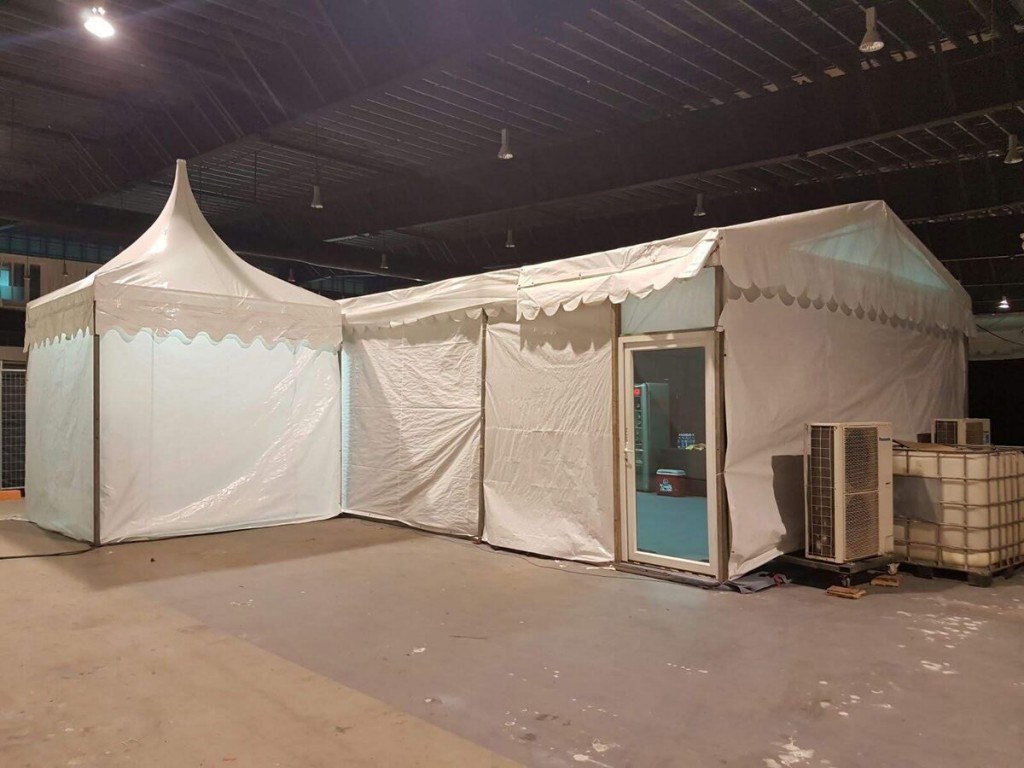
Wet weather contingencies for a wake mean secured sidewalls, proper drainage planning and a tent anchored to handle sudden downpours without disrupting the visitors inside. Singapore’s afternoon thunderstorms and the Nov-Jan monsoon season both make this a real practical consideration, not an edge case, for any outdoor or void deck wake.
What a Weather-Ready Wake Tent Looks Like
Sidewalls that can be dropped quickly on one or more sides protect seating and lighting from wind-driven rain, which is common during Singapore’s sudden afternoon storms. A properly secured tent frame, anchored appropriately for the surface, whether void deck concrete or open ground, holds steady through most weather Singapore sees.
Drainage matters more than people expect, especially at void decks where the floor isn’t always perfectly flat. Water pooling against the tent base during a heavy downpour is a genuinely common issue, and a good crew checks for this during setup rather than after the first storm.
Monsoon Season Considerations (Nov-Jan)
Wakes falling during the Nov-Jan monsoon season should have sidewalls confirmed as standard, not an add-on, given the higher likelihood of sustained rain. It’s worth asking directly whether this is included when booking during these months.
The most common issue we see during monsoon season isn’t the tent failing, it’s families not realising sidewalls needed to be requested specifically, leading to a wet, windy first evening that could have been avoided with one extra question at booking.
What Happens if Rain Starts Mid-Wake
If rain starts during visiting hours, sidewalls should be droppable within minutes by the family or a crew member on standby, without needing to call the tentage company and wait for someone to arrive. Confirming this capability at setup, not assuming it, is worth the extra few minutes.
For extended or severe weather, some providers offer a check-in call or visit during a multi-day wake to confirm everything is holding up properly, particularly for 5-day Buddhist or Taoist wakes spanning a full week of unpredictable weather.
Frequently Asked Questions
Are sidewalls included for wet weather protection?
This varies by provider, so confirm directly, especially for wakes during the Nov-Jan monsoon season when the likelihood of rain is higher.
Can the tent handle Singapore’s sudden afternoon thunderstorms?
Yes, a properly anchored and secured tent with sidewalls ready to drop is designed to handle these conditions. This is standard practice for any reputable tentage provider, not a special request.
What if water pools at the void deck floor during rain?
This should be checked and addressed during setup, either through positioning or minor drainage adjustments. Raise this with the crew if the void deck surface isn’t perfectly flat.
Does wet weather affect setup timing?
Setup during active rain may take slightly longer as the crew works carefully around wet ground and secures anchoring properly, but it doesn’t typically prevent same-day setup.
Open-Air Wakes vs. Void Deck Wakes: Different Exposure
Void decks offer some natural shelter from the existing building roofline, reducing wind exposure compared to a fully open-air setup like a landed property driveway or field. Open-air wakes need more robust anchoring and are more exposed to wind-driven rain from multiple directions, so the tentage crew typically uses additional ballast or stakes depending on the surface.
If your wake is happening somewhere other than a void deck, mentioning the exact surface, concrete, grass, or gravel, helps the crew choose the right anchoring method before arriving rather than adjusting on-site.
Humidity and Equipment During Extended Wet Periods
Extended rainy stretches can affect electrical connections and equipment over a multi-day wake. Weatherproofed connections and lighting positioned away from direct water exposure are standard practice, and it’s reasonable to ask the crew to confirm this during setup if the forecast looks unfavourable for the full wake duration.
Fans and lighting should also be checked periodically during an extended wet period, since a properly set up tent can still develop minor issues after several days of continuous exposure to heavy rain.
Visitors arriving on foot during rain also benefit from a small covered area or umbrella stand near the tent entrance, keeping the main seating dry as people transition in from outside. This is a small addition but one that noticeably improves the experience during a wet spell.
Checking the Forecast Before Setup Day
Most tentage crews check the weather forecast before a wake setup as standard practice, adjusting sidewall placement and anchoring based on what’s expected over the coming days rather than reacting only once rain arrives. This proactive approach is one of the clearer signs of an experienced provider.
Families don’t need to track the forecast themselves; it’s reasonable to expect the crew handling the setup to factor this in as part of doing the job properly.
Next Step
If your wake falls during a period with rain in the forecast, ask us directly about sidewalls and drainage when you call. We handle wet weather wake setups regularly through our tentage rental services, or contact us directly for a same-day arrangement.
