Tentage safety standards come down to five checkable things: certified fire-retardant fabric, correct anchoring for the site’s wind exposure, PE structural endorsement where required, clear escape routes, and secure electrical wiring kept separate from walkways. A professionally installed tent shows all five without you needing to ask twice.
How Can You Tell If Tentage Is Installed Safely?
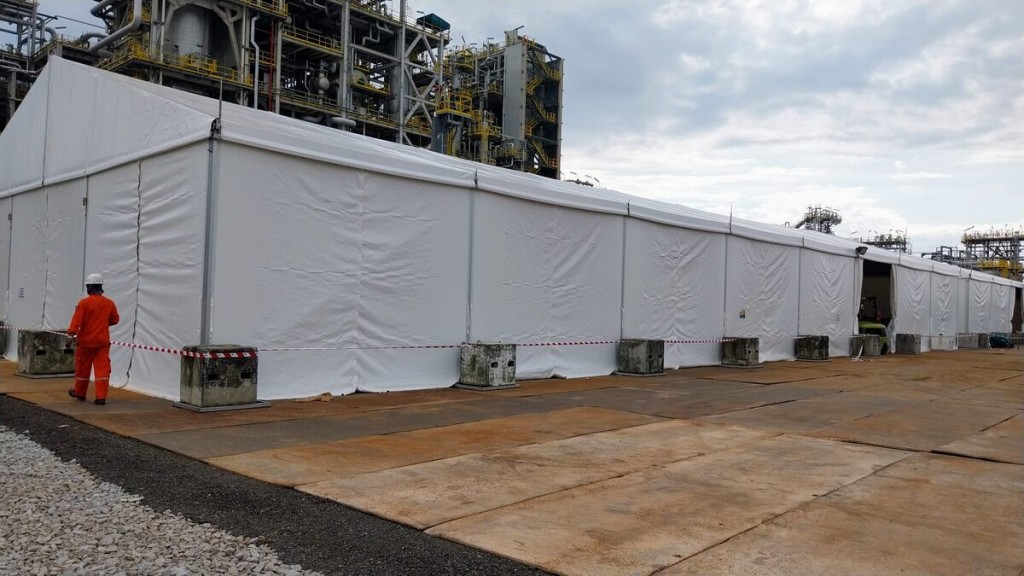
Walk the site before guests arrive and check specific points: are guy lines taut and clearly marked to avoid tripping, is ballast or ground staking appropriate for the surface, are electrical cables run along the tent perimeter rather than across walkways, and is the fabric free of tears or repairs that compromise fire-retardant integrity.
The most common mistake we see on setup day is a crew treating anchoring as a formality rather than a calculation. Ballast weight and staking depth should reflect the site’s wind exposure, an open field needs more than a sheltered courtyard, not the same default every time.
Ballast vs. Staking: Which Is Safer for Your Site?
Ground staking works well on grass or soil where stakes can be driven deep enough to hold. Hard surfaces like concrete void decks or MSCP rooftops require ballast weights instead, since staking is not possible. A professional installer assesses your specific surface rather than defaulting to whichever method is faster to set up.
| Safety Element | What to Check |
|---|---|
| Fabric certification | Fire-retardant certificate available on request |
| Anchoring | Method matches surface: staking for soil, ballast for hard ground |
| Structural endorsement | PE certificate for tentage above BCA exemption threshold |
| Escape routes | Minimum 1.2m clear path maintained at all times |
| Electrical wiring | Cables secured along perimeter, not crossing walkways |
What Questions Should You Ask Your Tentage Supplier?
- Can you show me the fire-retardant fabric certification?
- What anchoring method will you use for this specific site?
- Does this structure need PE structural endorsement, and do you have it?
- How will electrical cables be routed to avoid walkway crossings?
- Who is my on-site contact if something looks wrong during the event?
We once had a client ask us these exact five questions before booking, and it remains one of the more reassuring pre-event conversations we have had, because it meant the setup crew knew exactly what standard they were being held to before they arrived.
What Does a Poorly Installed Tentage Setup Look Like?
Warning signs include sagging fabric with visible slack in the roofline, guy lines running directly across a walking path without markers, exposed extension cords lying on the ground in guest areas, and a crew that cannot answer basic questions about anchoring or certification when asked directly.
Frequently Asked Questions
How do I know if my tentage supplier is following safety standards?
Ask for fire-retardant certification and, for larger structures, PE endorsement documentation. A supplier confident in their safety practices will provide these without hesitation.
Does tentage need re-checking during a multi-day event?
Yes, especially after heavy rain or wind. Anchoring and structural integrity should be spot-checked periodically for installations lasting more than a day.
Is ballast or staking always better?
Neither is universally better, the right choice depends on your ground surface. Concrete and hard surfaces need ballast; soil and grass typically use staking.
Who is liable if unsafe tentage causes an injury?
Liability depends on the specific circumstances, the supplier’s certification status, and insurance coverage, and is worth discussing directly with your supplier before booking.
Can I request a site inspection before the event?
Yes, most reputable suppliers welcome a walkthrough before guests arrive, and this is a reasonable request for any event of meaningful size.
Weather Resilience as Part of the Safety Standard
Singapore’s afternoon thunderstorms and NE monsoon season from November to January put anchoring and structural integrity to a real test, not a theoretical one. A tentage installation that looked secure on a calm morning can be exposed within hours once wind picks up ahead of a storm. Professional installers build in a safety margin for this, rather than anchoring to the bare minimum for the conditions at setup time.
Ask your supplier what their process is if severe weather is forecast during your event window. A team with a clear answer, additional ballast, reinforced staking, or a contingency plan for pausing outdoor activity, is signalling real experience with local conditions rather than a generic response.
Electrical Safety Around Tentage
Power for lighting, sound systems, and aircon tentage rental units needs to be routed and secured properly, ideally through weatherproof connectors and cable covers where cords cross any walkway. Loose cables in a guest area are both a trip hazard and, in wet conditions, a real electrical risk that professional crews take seriously rather than treating as a minor inconvenience to tidy up later.
Training and Experience of the Setup Crew
Beyond the equipment itself, ask how many years the crew supervising your installation has been doing this specific work. Tentage safety is as much about the judgement calls made on-site, whether a gust warrants extra ballast, whether a slope needs adjusted staking depth, as it is about the equipment specifications on paper. An experienced crew catches problems a checklist alone would miss.
Book Tentage That Meets Real Safety Standards
Do not settle for a supplier who cannot answer basic safety questions clearly. Talk to us about tentage rental in Singapore and we will walk you through exactly how your specific setup will be anchored and certified.
